
Fort Washington Previous Residents by Era
A Fort Washington address trail changes its sources as it crosses eras. Begin in the present. The current parcel card and the recorded deed supply the account number, legal description, book and page. The prior-reference wording points one step back. From there, historical index series, city directory volumes, census schedules, maps, permits, and newspapers help test who occupied the property earlier. Fort Washington is unincorporated. Prince George's County offices and Maryland repositories hold the records as custodians.
| Source | Years it covers | Where held | What it shows |
|---|---|---|---|
| MSA pre-1851 court land records | 1696-1851; index series 1696-1840 or 1851 | Maryland State Archives Guide, series-specific access | Colonial deeds, grants, legal descriptions, and parties |
| Circuit Court land records | 1851-1966 documented paper, electronic, and microfilm series | Circuit Court and MSA inventory | Deeds and other recorded instruments |
| Grantor and grantee indexes | 1884-1949 historical series; original series through 1992 | MSA historical index series | Party names that can lead backward through a transaction |
| Modern MDLandRec | Current repository; exact Prince George's online-name start year not published | Maryland State Archives portal | Book, page, party, instrument, and image searches |
| Directory runs | 1912-13, 1918, 1923, 1930-31, and 1962 leads | Libraries, archives, and genealogical collections | Named households, printed addresses, and occasional spouse notation |
| Federal census | 1910, 1920, 1930, 1940, and 1950 public schedules | NARA and library database routes | Household relationships, ages, and enumeration context |
| DPIE eRecords and Momentum | eRecords 2014 to May 1, 2023; most current categories after July 15, 2024 | County permit systems | Permit, application, plan, or inspection trail |
Match the record to the era. A recent Fort Washington transfer starts with the parcel card and MDLandRec. A nineteenth-century legal description belongs to the MSA series. A modern name field rarely reaches that far back. For household questions, pair the dated deed with a directory or census source. The documented series reach back to 1696. Not every image is searchable from home, though. Each step in a resident lookup answers to its own period.
Note: Keep the source year beside each name. An address history is a sequence of dated records rather than one fixed roster.
Anchor a Fort Washington Parcel Record
The Maryland SDAT Real Property Data Search builds the modern anchor. Select Prince George's County first. Then search by street address, property account identifier, map and parcel, or the separate sales method. Owner-name, town, neighborhood, and ZIP-wide searches are not supported. If the number fails, strip the directional or suffix from the street name and try again. The documented wildcard method helps too. Compare the parcel against PGAtlas for confirmation. Record two addresses separately. The premises or situs address is the physical one assigned locally. The mailing address is simply where the owner wants assessment and tax notices sent, and it may be in another state entirely. Save the account or PAN, map, grid, parcel, subdivision or lot, legal description, deed book and page, assessment year, and the date you retrieved everything. These fields bridge the parcel to past residents. Follow the chain one link at a time. Premises address leads to parcel card, parcel card to deed reference, deed reference to an earlier party, and that party to an older deed. Keep the original spelling and address form at every step.
Trace Previous Residents Through Deed Links
The Maryland State Archives MDLandRec portal hosts Prince George's County land records online. Filter to the county, then search by book and page or by party name. The current Fort Washington deed's prior-reference wording points to the earlier instrument. Newer portal guidance adds party type, instrument type, legal capacity, cross-reference book and page, date range, and historical, retired, or active index categories. Remote image access requires an account. Fees and access conditions can change, so confirm them before relying on a remote copy.
- Copy the SDAT deed reference and legal description before opening the deed index.
- Find the current transfer by book and page or by the recorded party name and date range.
- Write down grantor, grantee, instrument type, execution and recording dates, book and page, legal description, and any prior reference.
- Search the seller as a grantee in an earlier range to locate that party's prior acquisition.
- Repeat the chain, switching to Maryland State Archives indexes or courthouse material when the active online index stops.
- For a trust or estate, use the Register of Wills and probate record as a separate source rather than guessing the transfer path.
- Grantor and grantee
- The grantor transfers an interest in an instrument; the grantee receives it. Those roles can reverse in an earlier deed.
- Chain of title
- A dated sequence of recorded transfers for a parcel. It is a research trail, not a legal conclusion.
- Legal description
- The lot, block, subdivision, tract, or metes-and-bounds wording that identifies land when street names or numbers shift.
The Circuit Court Land Records Division helps locate a Fort Washington deed reference. It cannot run a title search or give legal advice. Preserve the original image and its reference rather than rewriting the legal description yourself.
Fort Washington Land Records Before Modern Search
Modern portals only reach so far back. The Maryland State Archives Prince George's County inventory is the fallback worth knowing for older Fort Washington land research. Court land-record series run there from 1696 to 1851. Circuit Court land records follow, from 1851 to 1966. Grantor and grantee index series appear there too. One entry stands out for tracing past residents. That is the M-NCPPC Circuit Court Land Records Cross-Reference Index, SE77. A planning document or historic-place reference may tie a Fort Washington place name to a specific set of land records. That index helps in those cases.
Assessment history runs deep in the county as well. The inventory covers assessment papers from 1786 to 1828 and later assessment records through 1919. Supervisor of Assessments material spans 1918 to 1974. Transfer books run from 1915 to 1969, and tax maps cover 1961 to 1972. Subdivision plats date from 1880 to 1975. A name or parcel linked to a previous resident of Fort Washington may never appear in a modern resident lookup. These series often explain why. The dates mark what survives, not a full online image set.
The Maryland State Archives inventory gives Fort Washington previous residents research a clear visual starting point.
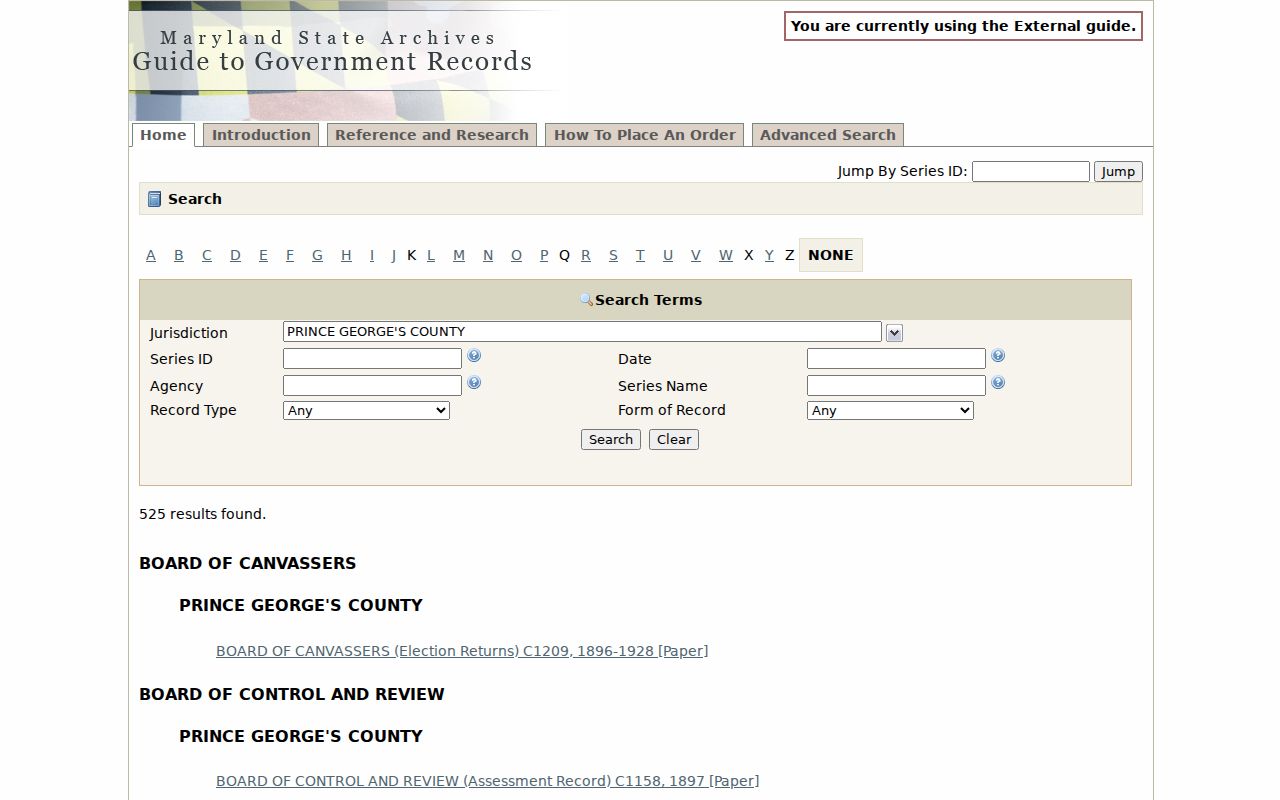
Use the listed series and index type to request the exact book, microfilm reel, or archival record rather than attempting a broad name search.
Fort Washington Previous Address Forms
Old Fort Washington addresses rarely match modern parcel text. M-NCPPC notes that early suburban roads changed names and numbering was inconsistent. A countywide grid system arrived in 1962. On September 8, 1973, the county announced coming address-number and street-name changes. The changes covered Fort Washington and nearby southern communities. Implementation then rolled out over several years.
Keep both forms when an old deed, directory, or census schedule refuses to match today's text. That old number is real evidence. Try a street-name variant, a neighboring road, a tract, subdivision, plat, map, or legal description. PGAtlas lets you compare the address point, road centerline, and parcel geometry. The recorded deed or plat still controls. Never silently convert a historic address into a modern one.
Note: Preserve an old number's source and date. Do this even after a likely modern parcel turns up.
Pair Fort Washington Past Residents
Deeds track owners and the parties to a transfer. Past residents need a second household layer. Local directory leads include Nelson's 1912-13 run, a 1918 citation, a 1923 Nelson citation, Polk's 1930-31 directory, and a 1962 Polk's Laurel lead. Each issue must be checked for exact Fort Washington coverage. Federal census schedules for 1910 through 1950 are public under the 72-year rule. They add household relationships and age data for a census date.
- Match a deed or parcel date to the nearest directory title and year that may cover the old locality.
- Search the address in a criss-cross or reverse directory when one is available, then compare the name listing.
- Check the matching public census decade, recording the enumeration district and place label exactly as printed.
- Test the result with a newspaper item, obituary, probate file, church or cemetery record, or another dated source.
- Keep uncertainty visible when the same surname appears at more than one address or the source has a multi-year gap.
The collections themselves are described on the Fort Washington city directory page. A directory name is only a lead. It proves neither ownership, every household member, nor continuous residence.
Fort Washington Previous Residents in Local Files
The Prince George's County Historical Society house-history guidance points researchers to courthouse land records and plats. It also lists tax and assessment records, newspapers, and historical files. PGCMLS's Prince George's Room adds Sanborn maps and old house and building photographs. Court proceedings, assessment books, and newspaper microfilm round out that room. A property-history consultation earns its keep when a known address carries a renumbering problem.
Sanborn maps date structures and their setting. Coverage is town and sheet specific, though. The Library of Congress holds a 1939 Washington Suburban volume. Prince George's County is among its listed places. That does not prove every Fort Washington road has a sheet. Ask for the exact title, volume, and sheet before attaching it to the address trail.
The Historical Society's house-research material is a source-backed Fort Washington previous residents lead.
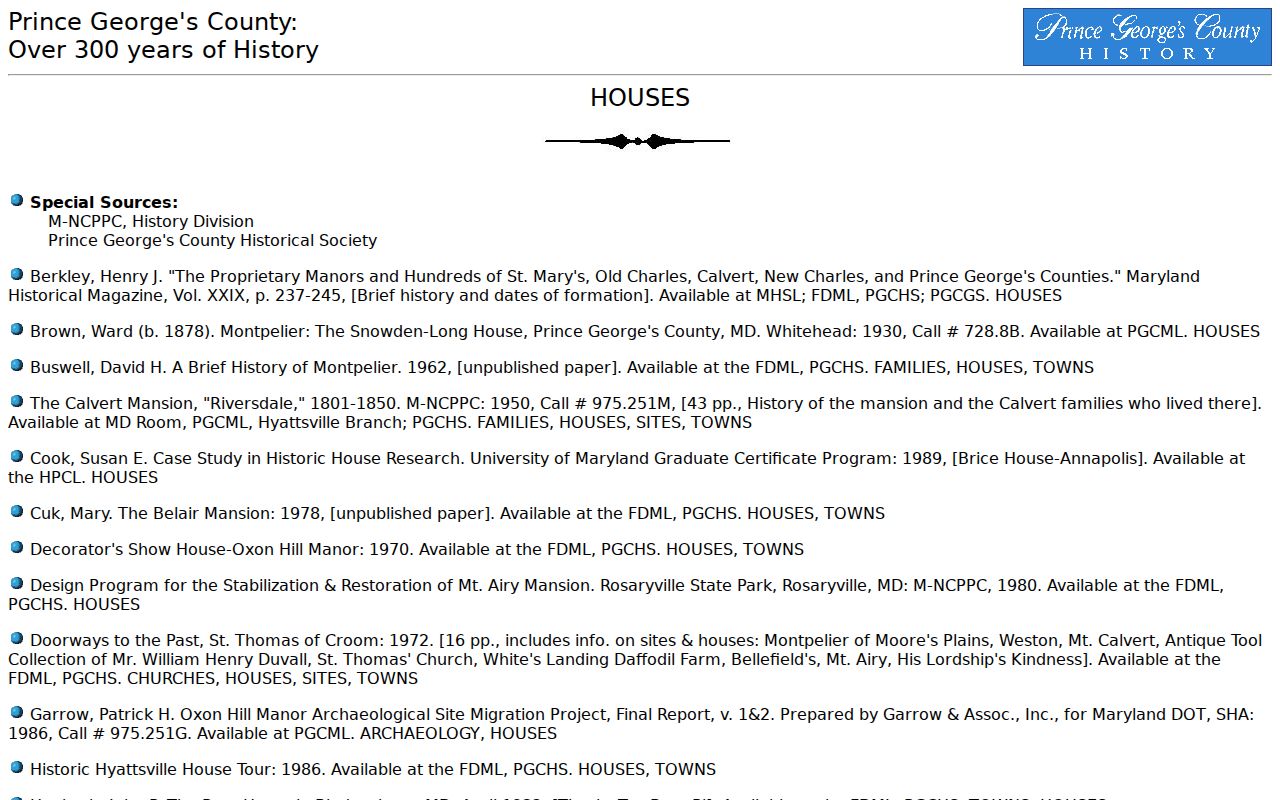
Its bibliography reinforces one lesson. Connect an address with deeds, plats, assessments, maps, and local files rather than leaning on a single record type.
Fort Washington Previous Residents Endpoints
Probate and newspapers can explain a break in the Fort Washington address trail. The Prince George's County Register of Wills offers statewide Estate Search basic data. It covers records generally from 1998 forward. Some older records have been added. Maryland State Archives inventory identifies local estate indexes and wills. Those go back to 1698. A trust or estate named in a deed deserves a probate check, because its parties and timing may clarify the transfer. Basic estate results remain leads, not proof of anyone's current address.
Prince George's Room newspaper microfilm covers older households. It includes the Sentinel, Post, Bowie Blade, and Laurel Leader. Search the exact date, surname variants, and likely paper title. No dedicated Fort Washington obituary index exists, so microfilm is the supported route. Historic place labels can also hide the town. A Fort Washington name may appear as Potomac, Piscataway, Marshall Hall, or Fort Washington Park. It may instead show up under a road or church name.
Lawful use. Fort Washington previous residents research is appropriate for house history, family history, and personal curiosity. Do not use any record to stalk, harass, or harm a living person.